Welcome to Dongguan
Dongguan, a dynamic and sprawling metropolis in the heart of the Pearl River Delta, is a city that defies simple categorization. Often overshadowed by its colossal neighbors, Guangzhou and Shenzhen, Dongguan is a powerhouse in its own right—a crucial node in the world's manufacturing supply chain and a city undergoing a remarkable cultural and urban renaissance. For the curious traveler, it offers a fascinating glimpse into modern China's economic engine, juxtaposed with pockets of profound historical significance and lush natural escapes. Navigating this vast city of 32 towns and subdistricts is an adventure, made comfortable by a wide range of accommodations; with over 1266 hotels to choose from, finding a base—from functional business towers to serene riverside retreats—is effortlessly simple. Dongguan invites you to move beyond the factory floor stereotype and discover its verdant parks, world-class sports venues, poignant museums, and a surprisingly vibrant local life that pulses through its bustling markets and tranquil gardens.
Overview
Dongguan's history is a tale of two epochs. For centuries, it was a quiet agricultural county known for its incense production. Its destiny changed forever with the arrival of European traders and the tragic events of the Opium Wars, history vividly preserved at Humen's Opium War Museum. In the late 20th century, it transformed at breakneck speed into 'the world's factory,' a manufacturing titan attracting millions of migrant workers. Today, Dongguan is ambitiously rebranding itself, investing in technology, culture, and livability. The city is famous globally for its manufacturing prowess, but locally, it's also celebrated as the 'City of Basketball' with a passionate fan base and the modern Dongguan Basketball Center as a temple to the sport. Culturally, it is a melting pot, blending traditional Lingnan culture, visible in sites like the exquisite Keyuan Garden, with the fast-paced, innovative spirit of a 21st-century megacity. Key districts include the bustling city center around Dongcheng, the historical hub of Guancheng, the industrial and commercial powerhouse of Houjie, and the scenic, greener areas like Songshan Lake, a high-tech park set around a beautiful artificial lake.
🗓️ Best Time to Visit
The best time to visit Dongguan is during the autumn (October to early December) and spring (March to April). These seasons offer the most pleasant weather, with mild temperatures, lower humidity, and less rainfall, ideal for exploring parks, historical sites, and the city streets. Autumn is particularly delightful, with clear skies and comfortable evenings. Winter (December-February) is short and mild but can be damp and chilly. Summer (May-September) is hot, humid, and rainy, with the peak of the monsoon and typhoon season from July to September; while indoor attractions and malls offer respite, outdoor activities can be challenging. Major events include the vibrant temple fairs and flower markets during the Chinese New Year (January/February), the Dongguan International Marathon usually held in the cooler months, and various trade fairs at the Dongguan Exhibition Center throughout the year, which can affect hotel availability. Visiting during the off-peak summer or around Chinese New Year (when the city empties) can mean fewer crowds and better deals, albeit with weather or logistical trade-offs.
🌤️ Weather & Climate
Dongguan has a humid subtropical climate characterized by long, hot, and rainy summers, and short, mild, and relatively dry winters. Humidity is high year-round.
Seasons
Spring
💨 Humidity: high
Warming up with increasing rainfall. Pleasant early, becoming humid and showery by May.
Summer
💨 Humidity: very high
Hot, humid, and wet. Frequent heavy downpours and thunderstorms; typhoons possible July-September.
Autumn
💨 Humidity: moderate
The most pleasant season. Warm days, cool nights, lower humidity, and minimal rainfall.
Winter
💨 Humidity: moderate
Mild and dry, but can be damp and chilly, especially without indoor heating. Rarely sees frost.
Monthly Weather Details
January Weather
Best for: sightseeing, cultural visits
February Weather
Best for: Chinese New Year festivals (if timing aligns)
March Weather
Best for: outdoor parks and gardens
April Weather
Best for: hiking before the peak heat
May Weather
Best for: indoor museums and shopping
June Weather
Best for: indoor activities, mall exploration
July Weather
Best for: typhoon season caution, indoor venues
August Weather
Best for: indoor activities, evening markets
September Weather
Best for: late summer indoor visits
October Weather
Best for: ideal for all outdoor and cultural activities
November Weather
Best for: perfect for sightseeing and hiking
December Weather
Best for: sightseeing, comfortable exploration
🎒 What to Pack
All Year Round
- umbrella or compact raincoat
- comfortable walking shoes
- power adapter
- reusable water bottle
🚗 Getting Around
Dongguan's public transportation network is extensive and improving. The Dongguan Rail Transit (metro) is the most efficient way to travel between major districts and attractions, with two lines currently operational and more under construction. An extensive public bus system covers the entire city, though routes can be complex for non-Mandarin speakers; having your destination written in Chinese is helpful. Taxis are plentiful and relatively inexpensive, with fares starting around ¥10. Ride-hailing apps like DiDi are ubiquitous and often more convenient. For the adventurous, shared bicycles (Mobike, Hello Bike) are everywhere and perfect for short trips within neighborhoods or along scenic paths like Songshan Lake. Note that Dongguan lacks a major commercial airport; the closest international gateways are Guangzhou Baiyun (CAN) and Shenzhen Bao'an (SZX). Direct coach buses and private car services (approx 1.5-2 hours, ¥200-400) provide efficient transfers. For maximum flexibility, especially to visit scattered factories or sites, hiring a private car with a driver for the day is a worthwhile investment, typically costing ¥500-800.
🎯 Top Attractions
Dongguan Exhibition Center
A venue hosting various trade shows, exhibitions, and cultural events throughout the year.
Keyuan Garden
A historic garden from the Qing Dynasty, featuring traditional architecture and serene landscapes.
Dongguan Science and Technology Museum
An interactive museum showcasing technological innovations and the development of science in China.
Dongguan City Center
A bustling urban area with shopping malls, restaurants, and entertainment venues.
Xiqiao Mountain
Scenic area with hiking trails, temples, and panoramic city views.
Dongguan Huangjiang Jinyi Market
Bustling market with local goods and food stalls.
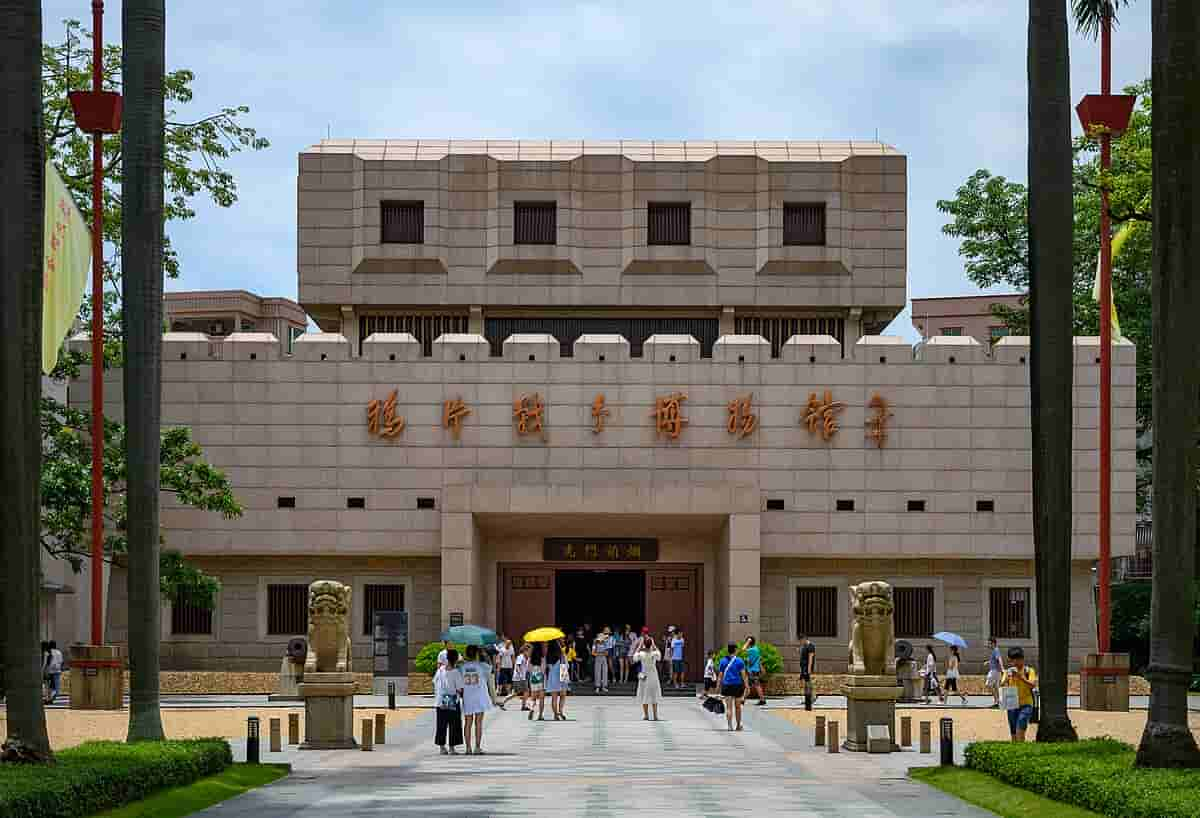
Opium War Museum
A museum dedicated to the history of the First Opium War, located in Humen Town.
Tianbao Metro Station
Metro station for convenient travel around Dongguan.
Wangniudun Ruins Park
Archaeological park with remnants of an ancient city wall.
Dongguan Basketball Center
A modern sports arena hosting basketball games, concerts, and events.
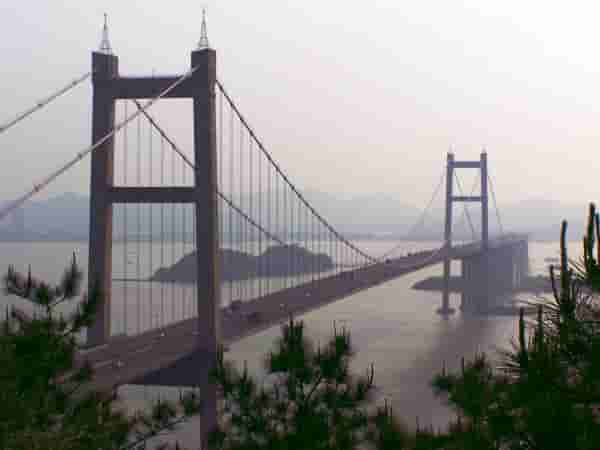
Humen Bridge
Marvel at the architectural wonder of this iconic suspension bridge overlooking the Pearl River.
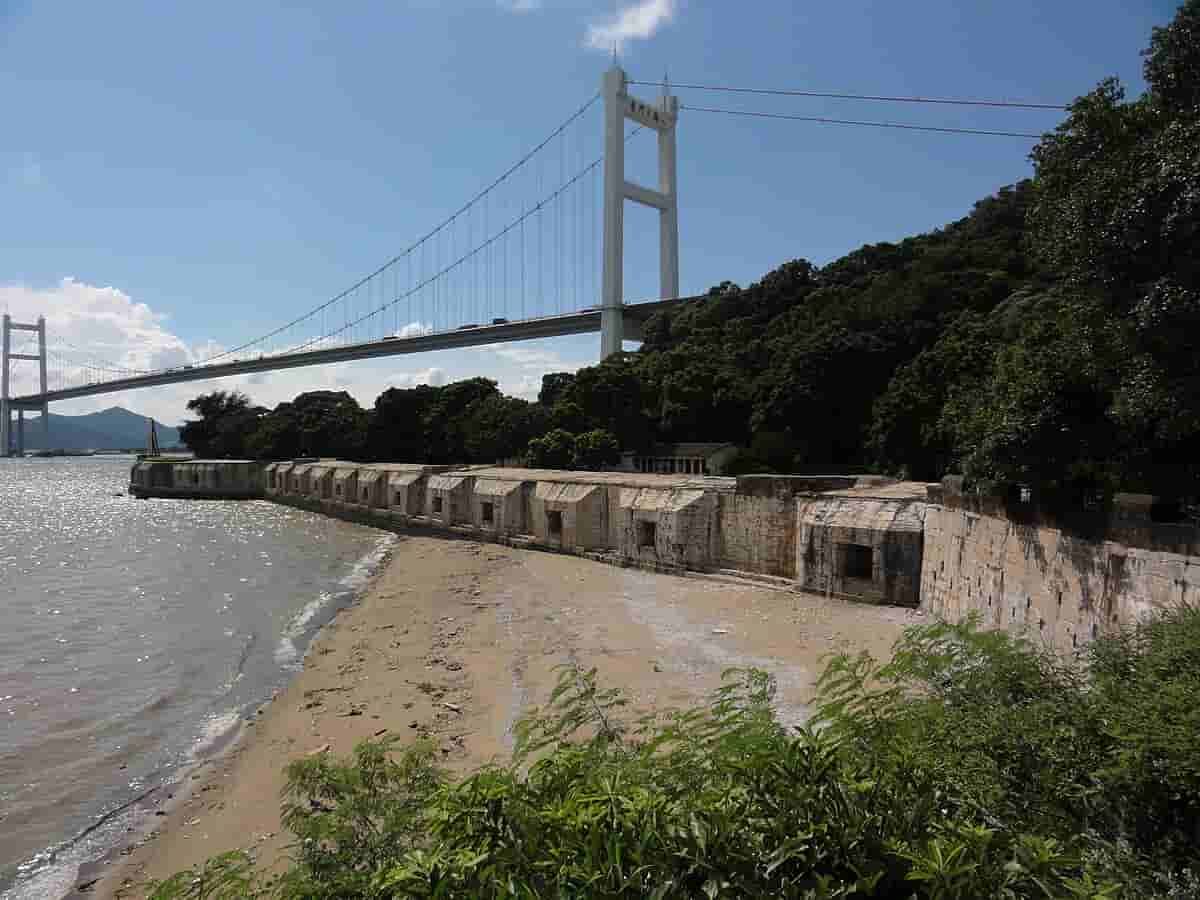
Weiyuan Fort
A historic fort from the Opium War era, offering insights into local military history.
🏘️ Neighborhoods
Dongcheng
The modern administrative and commercial heart of the city, home to government buildings, Haiya Mega Mall, the Exhibition Center, and many high-rise hotels.
Nancheng
A bustling commercial and residential district known for its vibrant dining scene, shopping at One Mall, and proximity to the City Center Square.
Guancheng
The historical old town, featuring cultural gems like the Keyuan Garden and the original city moat. Offers a glimpse into Dongguan's past.
Humen
A strategic port town famous for its pivotal role in the Opium Wars. Home to the must-visit Opium War Museum and historic naval battle sites.
Songshan Lake
A planned high-tech park and eco-friendly zone built around a large, beautiful artificial lake. Offers cycling paths, greenery, and a more relaxed pace.
Houjie
A major industrial and commercial town, known for its furniture markets, lively nightlife, and dense concentration of factories and businesses.
Chang'an
Another key industrial town bordering Shenzhen, with a well-developed urban center, good shopping, and easier access to Shenzhen.
🍽️ Local Cuisine
Dongguan's cuisine is a highlight of Cantonese food, emphasizing fresh, local ingredients and delicate flavors. Signature dishes include *Lingnan* roast goose, prized for its crispy skin and tender meat, and Dongguan rice noodles (**fen*), served in a light broth with various toppings. Don't miss *zao* duck, marinated in fermented rice, or the hearty claypot rice. The city is also famous for its abundant freshwater fish and seafood from the Pearl River Delta. For a unique experience, seek out a **sugarcane juice** hot pot, where the broth is sweetened with cane. Dining culture ranges from humble noodle shops and bustling *dapaidang* (open-air food stalls) to upscale banquet restaurants. Popular food areas include the streets around Dongcheng's markets, the food courts in major shopping malls like *Haiya*, and the night markets in Houjie. A satisfying local meal can cost as little as ¥30, while a multi-course banquet can run into the hundreds. Etiquette is standard for China: sharing dishes is the norm, and it's polite to leave a little food on your plate to indicate you are full.
💡 Local Tips
🚗 Day Trip Ideas
Shenzhen
Explore China's tech and innovation hub, visit Window of the World, Shenzhen Bay Park, or shop at Luohu Commercial City.
Guangzhou
Immerse yourself in the historic capital of Guangdong, visiting Canton Tower, Chen Clan Academy, and sampling authentic dim sum.
Foshan (Nanhai District)
Discover the birthplace of Cantonese culture and martial arts, including the Bruce Lee ancestral home and ancient Nanhai film studio town.
Huizhou (West Lake)
Enjoy natural scenery at Huizhou's beautiful West Lake area, a quieter alternative with pagodas, gardens, and lake views.
The Ancient Fortresses of Kaiping
A UNESCO World Heritage site featuring unique multi-story fortified tower houses (Diaolou) in the surrounding countryside.
🛡️ Safety Tips
Dongguan is generally a very safe city for travelers, with low rates of violent crime. Standard urban precautions apply: be aware of your belongings in crowded areas like markets (Huangjiang Jinyi Market) and on public transport to guard against pickpocketing. Traffic can be chaotic; cross streets carefully at designated crossings. Health-wise, drink bottled or boiled water. While tap water is treated, it's not recommended for drinking. Be cautious with street food; choose stalls with high turnover. Common scams are rare but can include overcharging in non-metered taxis (always use the meter or DiDi) or being led to overpriced tea houses or shops by overly friendly 'students.' It's advisable to avoid unlicensed tour guides. Emergency numbers: Police (110), Fire (119), Ambulance (120). For non-emergency translation help, dial 12345, the local government service hotline. Keep the address of your hotel written in Chinese handy.
💰 Budget Guide
Dongguan can cater to all budgets, though it's primarily a business city, so true budget options are less tourist-oriented. **Budget (¥300-500/day)**: Dorm beds or basic local hotels cost ¥150-250/night. Eat at local noodle shops and food stalls (¥15-40 per meal). Use public buses and the metro (¥2-10 per ride). Free activities include exploring parks like Wangniudun Ruins Park and window-shopping at massive markets. **Mid-Range (¥500-1000/day)**: Comfortable business or international chain hotels average ¥300-500/night. Enjoy meals at mid-range restaurants (¥50-150 per person). Use taxis/DiDi for convenience. Visit paid attractions like the Opium War Museum (¥20-60) and enjoy mall amenities. **Luxury (¥1000+/day)**: Five-star hotels (Hyatt, Marriott) cost ¥600+/night. Fine dining and private banquets run ¥200+/person. Hire a private car and driver. Enjoy VIP seats at a basketball game or spa treatments. **Money-saving tips**: Book hotels in advance online for better rates, especially outside the city center. Eat where locals eat. Use the metro system extensively. Visit during the low summer season (excluding holidays) for accommodation deals.