Welcome to Harbin
Harbin, the vibrant capital of Heilongjiang province in northeastern China, is a city of dramatic contrasts and enchanting beauty. Known globally as the 'Ice City,' it transforms each winter into a breathtaking wonderland of crystalline sculptures and luminous ice lanterns, drawing visitors from across the globe. Yet, its allure extends far beyond the frosty season, revealing a rich tapestry of Russian and European architectural influences, a deep-rooted cultural history, and a surprisingly green summer landscape. Strategically located near Russia, Harbin's unique character is a direct result of its history as a major railway hub and cosmopolitan center. With a welcoming infrastructure that includes 876 hotels catering to every taste and budget, finding a comfortable base from which to explore this multifaceted destination is effortlessly simple. Whether you're marveling at the frozen spectacles of Harbin Ice and Snow World, strolling down the historic cobbles of Central Street, or seeking tranquility in the Qunli National Urban Wetland, Harbin promises an unforgettable journey into a world where East meets North in the most spectacular fashion.
Overview
Harbin's story is one of rapid rise and cultural fusion. Its modern development began in the late 19th century with the construction of the Chinese Eastern Railway, which attracted a large influx of Russian engineers, traders, and emigres. This legacy is etched into the city's very skyline, most famously in the Byzantine-style Saint Sophia Cathedral and the European-inspired architecture lining Zhongyang Dajie (Central Street). The city is famously the birthplace of China's iconic Harbin International Ice and Snow Festival, a winter extravaganza that showcases monumental ice buildings and intricate snow sculptures. Culturally, Harbin is a hub for music and the arts in Northeast China, with a renowned symphony and the historic 'Baroque' district. The city is divided by the Songhua River, with the bustling downtown areas like Daoli and Nangang on the south bank, and recreational zones like Sun Island on the north. From its role as a key industrial center to its status as a winter tourism capital, Harbin is a city that proudly wears its history on its sleeve while constantly reinventing itself for the future.
🗓️ Best Time to Visit
The best time to visit Harbin depends entirely on the experience you seek. For the iconic winter magic, plan your trip between late December and early February. This is peak season, centered around the world-famous Harbin International Ice and Snow Festival (typically opening January 5th). Be prepared for extreme cold, with temperatures often plunging below -20°C (-4°F), but rewarded with the illuminated marvels of Ice and Snow World and Sun Island's snow sculpture park. Summer (June to August) is pleasantly warm and green, ideal for visiting Sun Island, the wetlands, and enjoying outdoor cafes. This is the off-peak season for tourism, offering lower hotel rates and smaller crowds. Spring (April-May) and Autumn (September-October) are short, transitional seasons with cool, sometimes unpredictable weather. Autumn offers beautiful foliage, while spring can be windy. Major events are concentrated in winter, but summer also hosts concerts and cultural events. For comfortable sightseeing without the deep freeze, late summer is highly recommended.
🌤️ Weather & Climate
Harbin has a monsoon-influenced, humid continental climate, characterized by long, bitterly cold, dry winters and short, warm, humid summers. The temperature variation between seasons is extreme, with a yearly average around 4°C (39°F).
Seasons
Winter
💨 Humidity: low
Long, freezing, and dry. Heavy snowfall occurs, and the river freezes solid. Essential for experiencing the ice festival but requires serious thermal gear.
Spring
💨 Humidity: moderate
Short, windy, and unpredictable. A transitional period with rapid warming, occasional rain, and possible late snowfalls in April.
Summer
💨 Humidity: high
Warm to hot and humid, with the majority of the year's rainfall concentrated in July and August. The most pleasant time for green spaces and outdoor activities.
Autumn
💨 Humidity: moderate
Brief, crisp, and sunny. Beautiful foliage, especially in early October. Temperatures drop rapidly from September to October.
Monthly Weather Details
January Weather
Best for: ice festival, winter sports
February Weather
Best for: ice festival, winter sports
March Weather
Best for: late winter sights
April Weather
Best for: indoor cultural sites
May Weather
Best for: sightseeing, parks
June Weather
Best for: sightseeing, outdoor activities
July Weather
Best for: Sun Island, river activities
August Weather
Best for: sightseeing, wetlands
September Weather
Best for: sightseeing, comfortable weather
October Weather
Best for: autumn foliage
November Weather
Best for: indoor cultural sites
December Weather
Best for: early ice festival prep
🎒 What to Pack
All Year Round
- power adapter
- comfortable walking shoes
- personal medication
🚗 Getting Around
Harbin has a comprehensive and affordable public transportation system. The metro is efficient, clean, and expanding, with lines connecting major railway stations (Harbin West, Harbin), the city center, and Sun Island. Fares range from 2-5 RMB per trip. An extensive network of public buses covers almost every corner of the city for a flat fare of 1-2 RMB. Taxis are plentiful and inexpensive, with a starting fare of 9 RMB. Ride-hailing apps like Didi are widely used. For short distances in the city center, especially along pedestrian-friendly Central Street, walking is a pleasure. Biking is popular in warmer months, with shared bike systems available. The Taiping International Airport (HRB) is about 37km from downtown. The most convenient transfer is by airport shuttle bus (20 RMB), which runs to several city points, or by taxi (approx. 120-150 RMB). A high-speed train also connects the airport to Harbin West Railway Station. For inter-city travel, Harbin's high-speed rail network is excellent.
🎯 Top Attractions
Qunli National Urban Wetland
A large park with wetlands, walking trails, and ecological features.
Harbin Ice and Snow World
Explore the enchanting winter wonderland of Harbin's famous ice festival, featuring breathtaking ice sculptures and snow-covered landscapes.
Saint Sophia Cathedral
Marvel at the stunning Russian-style architecture of this iconic cathedral, a symbol of Harbin's diverse cultural heritage.
Harbin Conference and Exhibition Center
Venue for events and exhibitions
Sun Island
A large recreational park on an island in the Songhua River, famous for its snow sculpture festival.
Harbin Central Street
A historic pedestrian street with European architecture, shops, and restaurants.
Baluoke
Local shopping and entertainment area
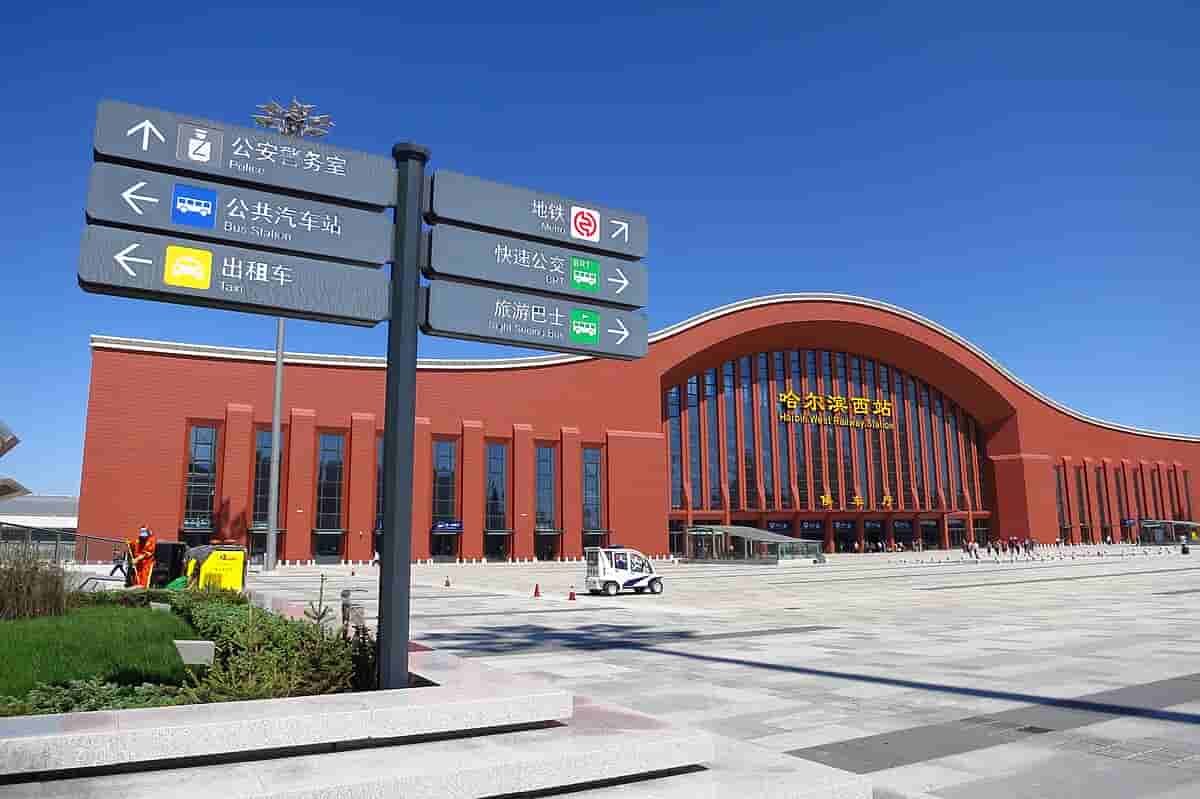
Harbin West Railway Station
A major high-speed rail station, providing convenient access to the city and beyond.
Wanda Plaza
A large shopping and entertainment complex with cinemas, stores, and dining.
Harbin Science and Technology Museum
An interactive museum great for families and those interested in science.
Harbin Wanda Plaza
A large shopping and entertainment complex with numerous stores, restaurants, and a cinema.
Ice and Snow World
A stunning winter attraction with ice sculptures and frozen fountains.
🏘️ Neighborhoods
Daoli (Central Street Area)
The historic and tourist heart of Harbin, centered around the iconic cobblestone Zhongyang Dajie. Packed with European architecture, shops, restaurants, and close to the Songhua River.
Nangang
A major commercial and administrative district south of the railway station. Home to Hongbo Square, shopping malls, government buildings, and the Harbin Ice and Snow World venue in winter.
Daowai
The 'old city' area, known for its traditional Chinese courtyard houses (siheyuan) and bustling local markets like the Nanji Food Market. Offers a more authentic, less touristy vibe.
Xiangfang
A large residential and developing district, home to the Harbin West Railway Station (high-speed rail hub) and several universities. Modern amenities with a local feel.
Songbei
A modern new district across the Songhua River, featuring Sun Island, the Tiger Park, and the futuristic Harbin Grand Theatre. Rapidly developing with new malls and parks.
Pingfang
A suburban district with significant historical sites related to WWII. Home to the Unit 731 Museum. Offers a sobering look at history away from the main tourist circuits.
🍽️ Local Cuisine
Harbin cuisine, or Dongbei Cai (Northeastern Chinese food), is hearty, flavorful, and designed to combat the cold. Influenced by Russian, Korean, and Manchu culinary traditions, it's known for robust portions and preservation techniques. Must-try dishes include Guo Bao Rou (sweet and sour pork tenderloin), a crispy, tangy delight; Harbin Red Sausage, a Russian-inspired smoked sausage; and Di San Xian, a stir-fry of potato, eggplant, and green pepper. Dumplings (Jiaozi) are a staple, with countless varieties. In winter, hot pot is immensely popular. For the adventurous, try Russian-style breads and pastries from shops along Central Street. Dining is generally casual and communal. Popular food areas include Lao Dao Wai for traditional eateries and the night markets around Zhongyang Dajie. Meals are very affordable: a street food snack can cost 5-15 RMB, a local restaurant meal 30-80 RMB per person, and a fine-dining experience from 150 RMB up. Etiquette is straightforward; sharing dishes is standard.
💡 Local Tips
🚗 Day Trip Ideas
Yabuli International Ski Resort
China's largest and best-equipped ski resort, with slopes for all levels. Also features a summer alpine slide and beautiful mountain scenery.
Volcano Cluster and Five Connected Pools (Wudalianchi)
A UNESCO Global Geopark featuring a stunning landscape of volcanic cones, lava fields, and mineral-rich interconnected lakes famed for their therapeutic properties.
China Snow Town (Xuexiang)
A picturesque village buried under meters of powdery snow each winter, creating a fairy-tale scene of traditional houses with snow-covered roofs and lanterns.
Zhaolin Park (for Ice Lantern Display)
While in Harbin, this is a classic day/evening activity. The park hosts the original and more traditional ice lantern exhibition, with smaller, intricate sculptures.
Longtao Mountain
A popular local getaway for hiking, temple visits, and enjoying autumn colors or summer greenery. Offers panoramic views of the surrounding countryside.
🛡️ Safety Tips
Harbin is generally a very safe city for travelers, with a low crime rate. Violent crime against tourists is rare. The primary concerns are petty theft in crowded areas like markets, train stations, and on public transport; keep valuables secure. In winter, the main safety issue is the extreme cold; protect against frostbite by covering all exposed skin. Be cautious of slippery ice on sidewalks. Common scams are relatively few but can include overcharging by unofficial taxis (always use metered taxis or Didi) and inflated prices at some tourist-centric shops near ice festival sites. When crossing the frozen Songhua River, only do so in designated, officially approved areas. Emergency numbers: Police 110, Fire 119, Ambulance 120. For health, drink bottled water and ensure you have comprehensive travel insurance, especially for winter sports activities. Air quality can be poor in winter due to heating systems.
💰 Budget Guide
Harbin can be experienced on a range of budgets, with winter being the most expensive due to high demand. Budget travelers can manage on 250-400 RMB per day. This covers a hostel bed (80-150 RMB), street food and local meals (60-100 RMB), public transport (10-20 RMB), and free/low-cost sights like Saint Sophia Cathedral exterior or walking Central Street. Mid-range travelers should budget 500-900 RMB daily. This allows for a comfortable hotel room (300-500 RMB), meals at good local restaurants (100-150 RMB), taxi rides, and entry to major attractions like Ice and Snow World (approx. 300 RMB). Luxury travel starts at 1,200 RMB+ per day, covering 4-5 star hotels, fine dining, private guides, and premium experiences. Money-saving tips: Visit in summer for lower accommodation prices, use public transport, eat at local noodle and dumpling shops, book hotels and Ice Festival tickets online in advance for discounts, and consider combo tickets for attractions. Many museums have free entry days.